
Roto-Rooter: Plumbing Service
Roto-Rooter Services Co.House & Home
4.377.00 Reviews
- Version
- 2.1.5
- Installs
- 100.00K
- Age Rating
- Everyone
Screenshots
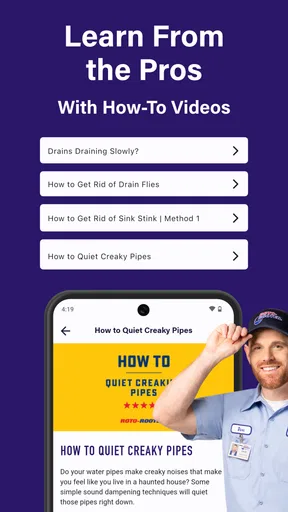
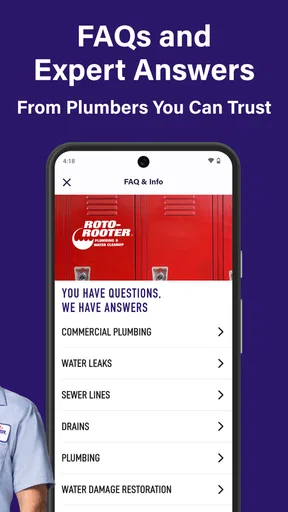
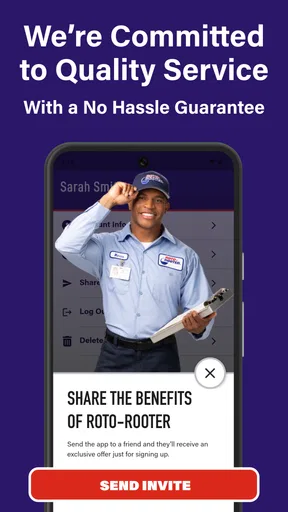
Our Review of Roto-Rooter: Plumbing Service
 Analysis by Appyee
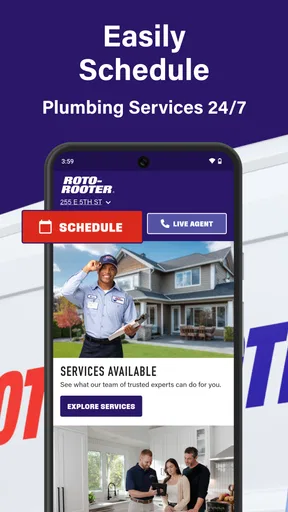
When a plumbing problem starts, the hardest part is often not recognizing the leak or blockage. It is deciding who to call, explaining the situation clearly, arranging a visit, and keeping track of what happens next. Roto-Rooter: Plumbing Service is built around that practical chain of events. I see it as a focused house and home service app for people who want to contact Roto-Rooter, follow a service request, and look for available coupons without handling everything through a browser or a phone call.
I tested it with the mindset of someone dealing with an inconvenient household problem rather than casually browsing a utility app. That distinction matters. This is not an app that teaches you how to repair a pipe, and it is not a marketplace for comparing several independent plumbers. Its purpose is narrower: connect you with the local Roto-Rooter service process and keep related information in one place. For the right situation, that narrow focus is useful. For others, it may feel too limited.
From the first plumbing problem to the service outcome
I find the most useful way to judge this app is to follow the whole job, from noticing a plumbing problem to handing the situation over to the person meeting the plumber. That perspective helps separate what the app can make easier from what still depends on clear communication and the local service process. A few simple preparations can make that handoff smoother, which is where reliability matters next.
Starting with a problem that needs a person, not another article
A blocked drain, overflowing toilet, backed-up basement, or sudden plumbing failure creates a very different need from a routine home-improvement search. If I am only trying to understand why a faucet drips, a general search engine or a repair guide may be more helpful. If water is already creating damage, however, I want a direct route to a service company. This is where the app makes sense.
The developer, Roto-Rooter Services Co., is also the service brand represented inside the app, so the experience is more direct than using a general local-services directory. I do not begin by comparing unrelated providers, reading a long list of profiles, or wondering whether a contractor covers my area. The trade-off is that I am entering one company’s service network rather than shopping across the whole market.
The app is free, which removes an obvious barrier when I am installing it during an urgent situation. Its Everyone content rating also makes it suitable for a household device shared by different family members. It supports Android versions from 7.0 onward, so compatibility should not be a problem for many older phones, although the experience will still depend on the device and connection available when the emergency occurs.
One useful habit is to install and open it before a crisis if Roto-Rooter is a company I would realistically use. During a leak, I do not want to spend time creating a mental checklist of what information might be needed. Having the app ready lets me concentrate on the condition of the home: where the water is coming from, whether a shutoff valve has been closed, and whether anyone needs to stay away from the affected area.
The request stage: turning a messy situation into a service order
The first workflow is arranging help. I would approach this by gathering the basic facts before starting: the address, the type of problem, whether the issue is active right now, and any details that could help a plumber arrive prepared. A short description such as “kitchen sink draining slowly” is less useful than explaining that the sink is full, another fixture is backing up, or water is appearing under the cabinet.
This is one of the app’s practical strengths. A dedicated service route encourages me to think in terms of a job rather than a vague complaint. That can reduce the back-and-forth that often happens when someone first says “I have a plumbing issue” and only later explains the symptoms. I would still take a few photographs for my own records, especially if the problem is intermittent, but I would not assume that every detail can be solved inside the app itself.
The important question is whether the request is urgent enough for a service call or suitable for a normal appointment. The app can help me enter the service process, but it does not replace judgment at the property. If there is a serious flood, exposed electrical equipment, sewage contamination, or a situation that appears dangerous, I would first protect people and the home and use the most immediate appropriate contact method rather than relying on an app screen.
Another point worth remembering is that the app is not a diagnosis tool. It may help me communicate the problem, but I should not treat the act of submitting a request as confirmation of the cause. A toilet that appears blocked could involve a wider drain issue; a damp patch could come from plumbing, an appliance, or a building problem. The service visit remains the point at which the physical situation is assessed.
Tracking changes after the request is placed
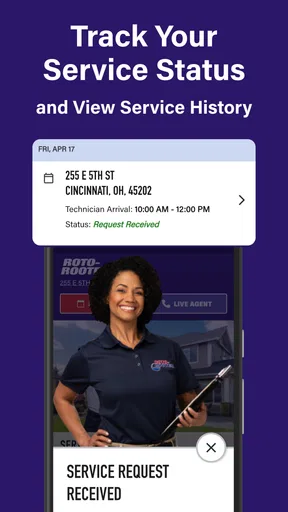
Once a service order exists, tracking becomes more valuable than the initial booking screen. In ordinary phone-based scheduling, I may have to search through call history, remember the name of the person I spoke with, or call back to ask whether anything changed. The app’s tracking function gives the order a visible place to return to.
I found this especially useful for a household where the person who makes the request is not the person who will meet the plumber. For example, I might arrange help while at work, then send the order details to a partner, relative, tenant, or property manager who is at home. That handoff is easier when the request has a clear digital reference instead of existing only in one person’s memory.
Still, tracking should not be confused with live control over the entire visit. A service order can move through several human steps: the request is received, local scheduling is handled, a technician is assigned, and the visit takes place. The app can organize the customer’s view of that process, but real-world timing may still depend on the local branch, technician availability, the severity of other calls, and the complexity of the problem.
My advice is to check the order before calling again, but not to wait passively if the condition is getting worse. If a small drip becomes a fast leak, or a drain backup spreads to another room, the change in circumstances matters more than the original description. I would update the service contact through the available route and explain what has changed rather than assuming the first request tells the whole story.
Coupons as part of the decision, not the reason to delay help
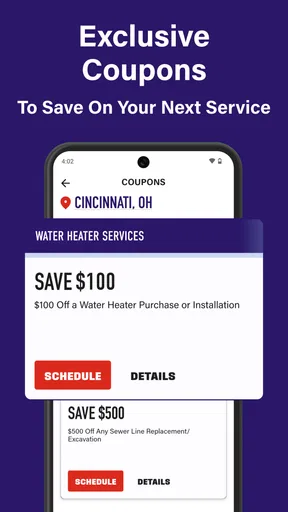
The coupon feature is a welcome extra, but I would treat it as a cost-checking step rather than the center of the experience. When a plumbing problem is urgent, delaying action to search for a discount can create a much larger household expense. I would look for an applicable offer before confirming a routine service or while waiting for the next step, but I would not allow a coupon search to postpone shutting off water or requesting help.
There is also a practical trade-off here. A coupon may be useful only under particular conditions, and a service request may involve details that affect eligibility. I would read the wording carefully and keep a record of the offer I intended to use. The app can surface an opportunity, but I would still ask the service representative how it applies to the specific job before assuming that the final amount will change.
This makes the coupon area more useful for planned work than for panic-driven emergencies. If I am arranging a drain cleaning, checking a recurring plumbing concern, or scheduling work that can safely wait, I have time to review the offer and ask questions. If water is actively damaging the home, the correct priority is containment and communication.
The handoffs that determine whether the workflow feels smooth
The app’s most important handoff is between the customer and the local plumbing operation. I enter the problem, but another person or team must interpret it, schedule it, and carry it into the physical world. That means the quality of the outcome depends partly on how clearly I describe the situation and partly on the local service process.
A second handoff occurs inside the household. The person who notices the problem may not be the person who owns the property, approves work, or opens the door. Before submitting a request, I would make sure the contact details, access instructions, and decision-maker are aligned. If a tenant reports the issue but a landlord must approve service, that relationship should be clear from the beginning.
A third handoff happens when the technician arrives. The app may help me keep the order organized, but I would still prepare a concise verbal summary: when the issue began, which fixtures are affected, what has already been tried, and whether the problem has changed. I would also point out shutoff locations and any areas where water has spread. This preparation is a small but non-obvious advantage of using a tracked workflow: I can review the original request and notice whether new information needs to be added.
For a property manager handling several homes, the value is less about convenience and more about continuity. A digital order can make it easier to remember which address has the problem and what stage the request reached. For a homeowner, the same feature is useful when family members share responsibility. For someone who prefers to speak with one person from the first minute to the last, the app may feel less personal than a direct phone conversation.
What the result looks like in everyday use
Imagine discovering that the downstairs toilet is overflowing shortly before leaving for work. I would first stop using nearby fixtures, close the local water supply if it is safe, and protect the floor. Then I would open the app, describe the active overflow and any signs that other drains are affected, and arrange service. After that, I would use the order-tracking area to check the request rather than repeatedly starting over.
If someone else is staying at the property, I would pass along the relevant order information and explain what the plumber needs to know. I would also keep photographs and notes separately, because they document the condition before work and are useful if the issue affects a rental, insurance claim, or shared building. The app is the coordination layer; it is not a replacement for household records.
The successful outcome is not simply that a request was submitted. The real result is a clear path from symptoms to a local service visit, with fewer opportunities to lose the thread. That is where this app earns its place. It reduces the mental load around arranging help, especially when I am already distracted by water, mess, or the risk of property damage.
Its current version is 2.1.3, and the app has reached more than one hundred thousand installs. I read that reach as a sign that the concept is useful to a meaningful number of households, while the average rating of 4.0 shows a generally positive but not flawless reception. The review volume is still modest enough that I would judge it by the workflow rather than expecting every local service experience to be identical.
Where the flow breaks or becomes less useful
The biggest limitation is scope. This is a branded service app, not a neutral comparison tool. If I want several quotes, independent reviews from competing plumbers, or a way to compare availability across companies, I would use a local-services marketplace or contact businesses directly. The focused approach is efficient when I already trust or intend to use Roto-Rooter, but restrictive when price shopping is the main goal.
The second limitation is that an app cannot remove the uncertainty of a physical repair. A clean tracking screen does not guarantee a particular arrival experience, a specific diagnosis, or a simple job. Local conditions and the actual state of the plumbing still control much of the outcome. I would use the app to organize communication, not as a promise that every stage will be predictable.
The third limitation is the risk of over-relying on digital status information. If my phone has a weak connection, the device is shared, or another household member is managing the appointment, I need a backup understanding of what was requested. I would save the important details in a note and tell everyone involved who is expected to be present. That is not a criticism of this app alone; it is a sensible precaution for any emergency service workflow.
There is also a mismatch between urgent and non-urgent users. Emergency users benefit from a direct route, but they may need faster human clarification than any app can provide. Planned-service users have more time to compare coupons, prepare access, and describe the issue, so they may get more value from the organized process. If I am only looking for maintenance advice or a do-it-yourself solution, this is probably not the first app I would open.
Who should use it and who should choose another route
I would recommend it to homeowners, renters with permission to arrange service, and property managers who already plan to use Roto-Rooter for plumbing work. It is particularly suitable when the main problem is coordination: getting a request started, keeping the order visible, and passing information to another person. The free installation and broad Android compatibility make it easy to keep available before a problem occurs.
I would be more cautious about recommending it to someone who wants a detailed troubleshooting library, transparent comparison shopping, or a single personal contact throughout the repair. Those needs point toward a repair guide, a local directory, or a direct call instead. I would also avoid making it the only plan for a dangerous active emergency. Safety and immediate communication come first, with the app supporting the process where it fits.
Overall, I like the app because it stays close to a real household task. It does not try to become a general home-management platform. Its best contribution is giving a plumbing request a beginning, a visible middle, and a clearer handoff toward service. The coupons add practical value for non-urgent work, while tracking is the feature I would care about most after submitting a request.
My recommendation is simple: install Roto-Rooter: Plumbing Service if Roto-Rooter is a realistic choice in your area and you want a convenient way to arrange and monitor service. Do not choose it as a replacement for comparing providers, diagnosing a complicated issue, or handling a dangerous situation without human help. Used for what it is designed to do, it is a sensible household utility that can make a stressful plumbing problem easier to manage from the first request to the final handoff.
Privacy and Permissions
See what permissions an app requests and how it handles your data.
- Location
- approximate location (network-based), precise location (GPS and network-based)
- Other
- view network connections, full network access, run at startup, control vibration, prevent device from sleeping, Google Play license check, read Google service configuration
Verdict
Strengths of Roto-Rooter: Plumbing Service
- 24/7 emergency plumbing assistance is available in many service areas.
- Licensed professionals can handle repairs, drain cleaning, and replacements.
- Requesting a quote or service visit is quick through the app.
- You can track appointment details and technician arrival information.
- A recognizable national brand may provide added service confidence.
Limitations of Roto-Rooter: Plumbing Service
- Availability and response times vary significantly by location.
- Service pricing may be higher than independent local plumbers.
- Some features may simply redirect users to the company website.
- The app may require location and contact permissions to work fully.
- Not every plumbing issue can be diagnosed or quoted remotely.
Similar Picks in This Category
View All
Universal TV Remote Control
CodeMatics Media Solutions3.9

AlfredCamera Home Security app
Alfred Systems Inc.4.7

Planner 5D: AI Home Design
Planner 5D4.5

Universal Tv Remote-Cast to TV
One Music Player4.1

Zillow: Homes for Sale & Rent
Zillow Group4.8

99acres Buy/Rent/Sell Property
infoedge.com4.3
Frequently Asked Questions
What services does the Roto-Rooter: Plumbing Service app provide?
The Roto-Rooter app is designed to help users request professional plumbing and drain-cleaning services from Roto-Rooter. Depending on your location, you may be able to arrange emergency plumbing assistance, water damage restoration, sewer and drain services, leak repairs, toilet repairs, and other household plumbing work. Available services can vary by local branch, so confirm the options shown for your address before booking.
Can I use the app to request emergency plumbing service?
Yes, the app is intended to make contacting Roto-Rooter easier when you need plumbing help, including urgent situations such as burst pipes, overflowing toilets, clogged drains, or serious leaks. However, response times and emergency availability depend on your location, time of day, technician availability, and the severity of the request. If there is immediate danger, shut off the water and contact local emergency services when appropriate.
How do I schedule a plumber through the Roto-Rooter app?
After opening the app, you generally provide your service address, describe the plumbing problem, and select an available appointment or request assistance as soon as possible. The exact booking steps may differ according to your region and the service required. Review the contact details, appointment information, and any estimate or service terms carefully before submitting the request.
Is the Roto-Rooter app free to download and use?
The application may be free to download, but downloading it does not mean that plumbing, inspection, emergency response, parts, labor, or restoration services are free. Charges are normally associated with the work performed and can vary based on location, timing, job complexity, and materials. Before approving repairs, ask the technician or local branch about diagnostic fees, estimates, and payment methods.
Is the Roto-Rooter app available everywhere?
Roto-Rooter operates through local service locations, so app functionality and coverage may depend on your city, region, and the address entered during the request process. Some features, appointment types, promotions, or emergency services may not be available in every area. Enter your location in the app or check the official service information to determine whether a nearby branch can help.
